Childcare is often viewed as a practical necessity for working parents. However, its value extends far beyond convenience. High-quality childcare environments provide crucial developmental benefits for children. It nurtures their emotional well-being, social skills, and educational foundations during their most formative years.
Together in this post, we will explore how childcare supports children’s emotional, social, and educational development, backed by research and expert opinions.
Emotional Development: Building Confidence and Independence
Attending childcare helps children develop emotional resilience and self-regulation. Being in a supportive environment outside of the home allows them to gradually adapt to new routines, manage minor stressors, and build confidence in unfamiliar settings.
According to the Harvard Center on the Developing Child, early relationships and environments shape a kids’ ability to cope with stress and regulate emotions. Responsive caregivers in childcare settings provide consistent emotional support, helping children feel secure and valued.
Furthermore, research from the National Institute of Child Health and Human Development (NICHD) has shown that children in high-quality childcare demonstrate better emotional adjustment and fewer behavioral problems over time.

Social Development: Learning to Collaborate and Communicate
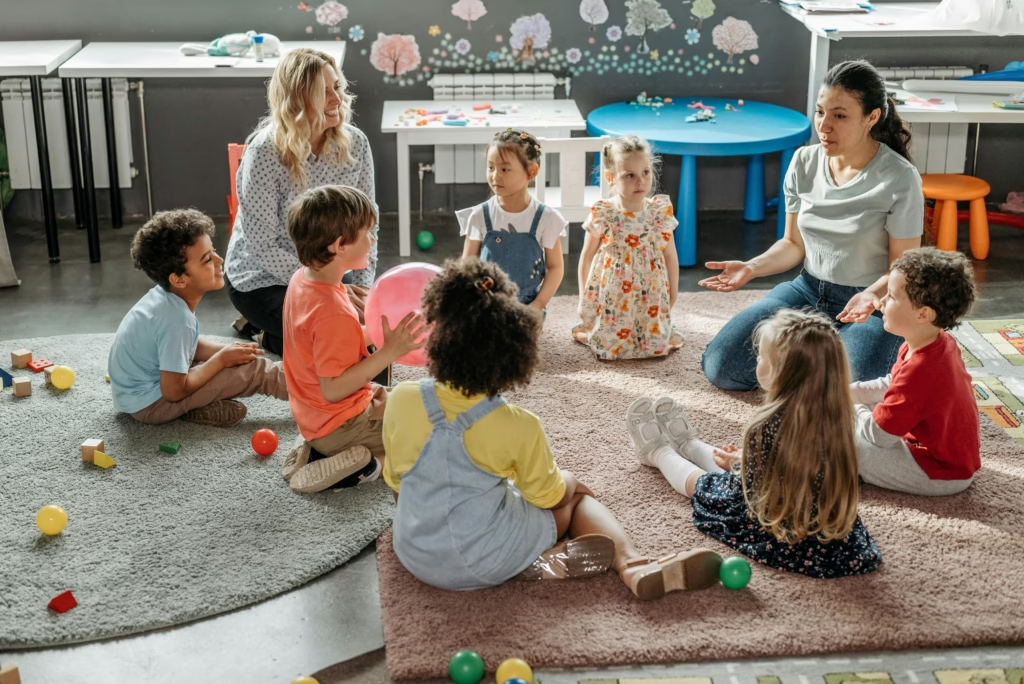
Social interaction is one of the most powerful aspects of childcare. In these settings, children learn to:
- – Share and take turns
- – Resolve conflicts
- – Understand empathy and cooperation
According to the American Academy of Pediatrics (AAP), positive peer interactions and relationships with adults during early childhood build the foundation for future interpersonal skills and academic success.
A study from the Pew Research Center also highlights that children who engage regularly with peers from an early age tend to show more adaptive social behaviors in later school settings.
Educational Benefits: Building Early Literacy, Numeracy, and Curiosity
High-quality childcare programs introduce structured activities that promote early learning. Activities like storytelling, singing, counting games, and problem-solving exercises help stimulate cognitive development.
The National Association for the Education of Young Children (NAEYC) emphasizes that early education programs support the development of critical thinking, language, and pre-math skills through play-based learning and exploration.
A landmark study—the Perry Preschool Project—showed that children who attended quality early childhood education programs had significantly higher academic achievement, better job outcomes, and reduced criminal behavior later in life.
The Long-Term Value of Quality Childcare
The benefits of childcare aren’t just short-term. Longitudinal research confirms that children who attend quality childcare are more likely to:
- – Succeed academically
- – Build strong relationships
- – Enter the workforce with confidence
Quality childcare also alleviates parental stress, contributing to healthier family dynamics overall. The OECD reports that investing in early childhood education improves equity and efficiency in the education system and society at large.
Conclusion
Sending your child to childcare is more than just a logistical solution—it’s a powerful investment in their emotional, social, and cognitive growth. By selecting a nurturing and developmentally appropriate childcare environment, you give your child a headstart toward becoming a confident, capable, and caring individual.
Remember: Not all childcare centers are created equal. Look for licensed programs with low child-to-caregiver ratios, trained staff, a safe environment, and a developmentally appropriate curriculum.
And that’s why you may like to check out our programs and get to know us from here.

So, if you’re interested to know more then feel free to check out our sources from here:
- – Harvard Center on the Developing Child
- – National Institute of Child Health and Human Development (NICHD)
- – American Academy of Pediatrics (AAP)
- – Pew Research Center
- – NAEYC – National Association for the Education of Young Children
- – HighScope Perry Preschool Project
- – OECD – Benefits from Early Childhood Education